

Bonding all grounding electrodes together
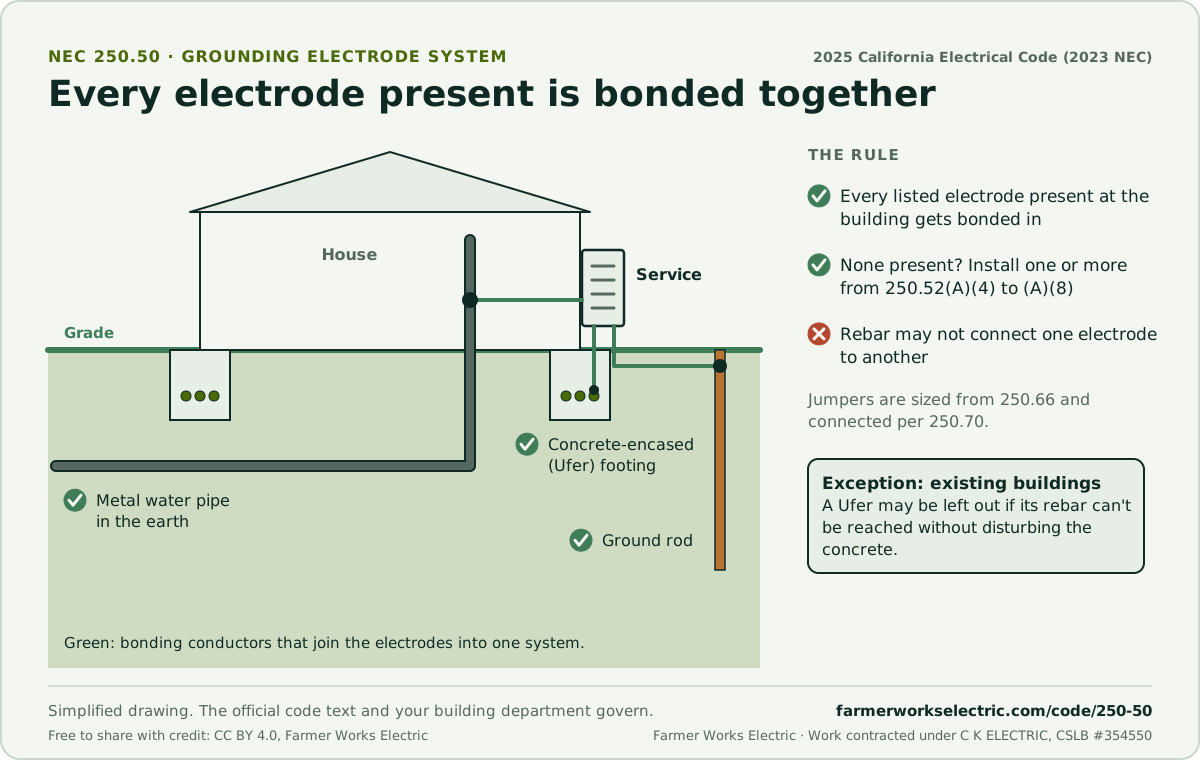
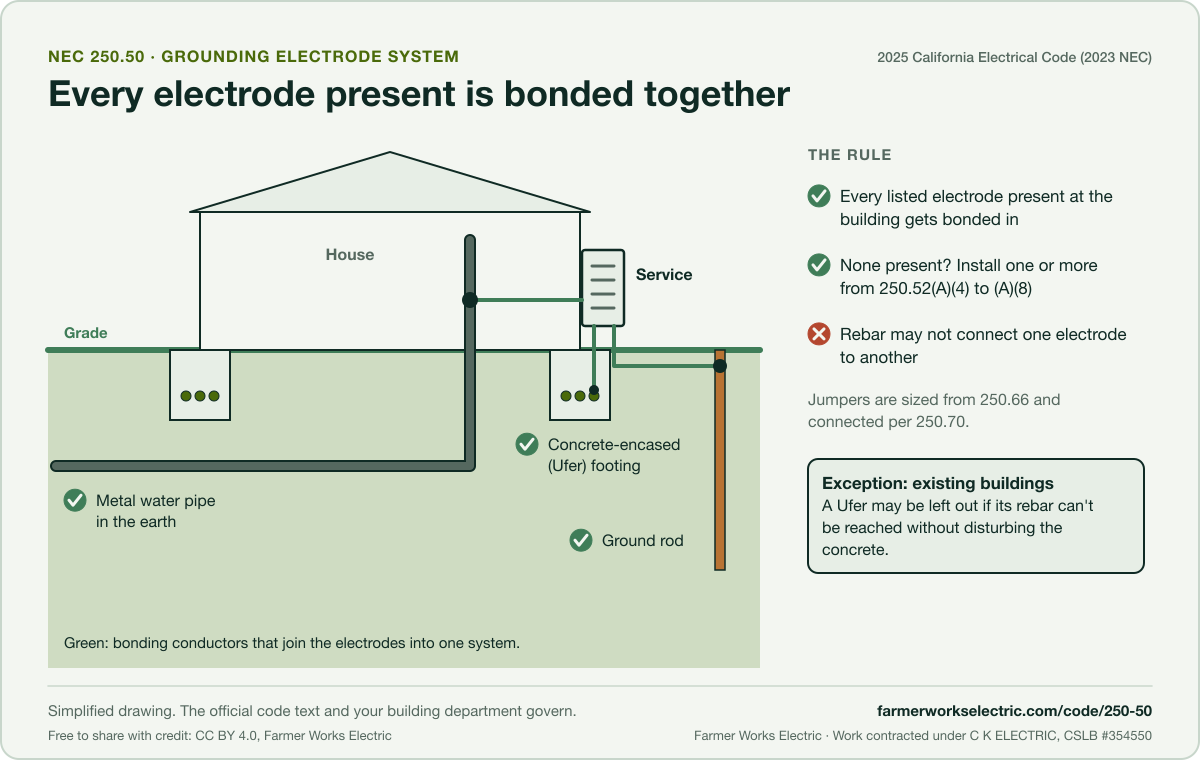
The code-listed grounding electrodes present at a building, such as a qualifying metal water pipe, a concrete-encased footing electrode or a ground rod, must all be bonded together into one grounding electrode system, with a narrow exception for existing buildings.
What the code requires
The code treats a building's grounding electrodes as one system. Every electrode type listed in 250.52(A)(1) through (A)(7) that is present at the building, such as metal underground water pipe, a metal in-ground support structure, a concrete-encased (Ufer) electrode, a ground ring, rods or plates, must be bonded together.
If none of those electrodes is present, one or more of the electrodes in 250.52(A)(4) through (A)(8) must be installed.
The bonding jumpers that join electrodes are covered in 250.53(C): they are sized from 250.66, installed under 250.64(A), (B) and (E), and connected under 250.70. Rebar may not be used to connect one electrode to another.
On the job
- On new construction, a footing with qualifying rebar has to be bonded as a concrete-encased electrode, so the connection needs to be planned before the concrete is poured.
- Installing only ground rods while ignoring a metal water service that qualifies as an electrode is a common correction.
- The rule covers the listed electrodes that are present at the building. Each one that exists must be tied in, apart from the existing-building exception below.
Exceptions that matter
- In an existing building, a concrete-encased electrode may be left out if its rebar cannot be reached without disturbing the concrete.
Related sections
- NEC 250.52: What counts as a grounding electrode
- NEC 250.53: Ground rod installation and the 25-ohm rule
- NEC 250.64
- NEC 250.66: Sizing the grounding electrode conductor
- NEC 250.68: Grounding electrode connections and the 5 ft rule
- NEC 250.70
Where this comes from
Send a photo. Get a real answer.
Text is fastest, and a photo quote is free. Call if it is urgent, if you smell something burning, or if a breaker will not reset.
Electrical work contracted under C K ELECTRIC · CSLB Lic. #354550 (C-10) · Farmer Works Electric license in process